Google is bringing travel sales into AI. Is your system ready?
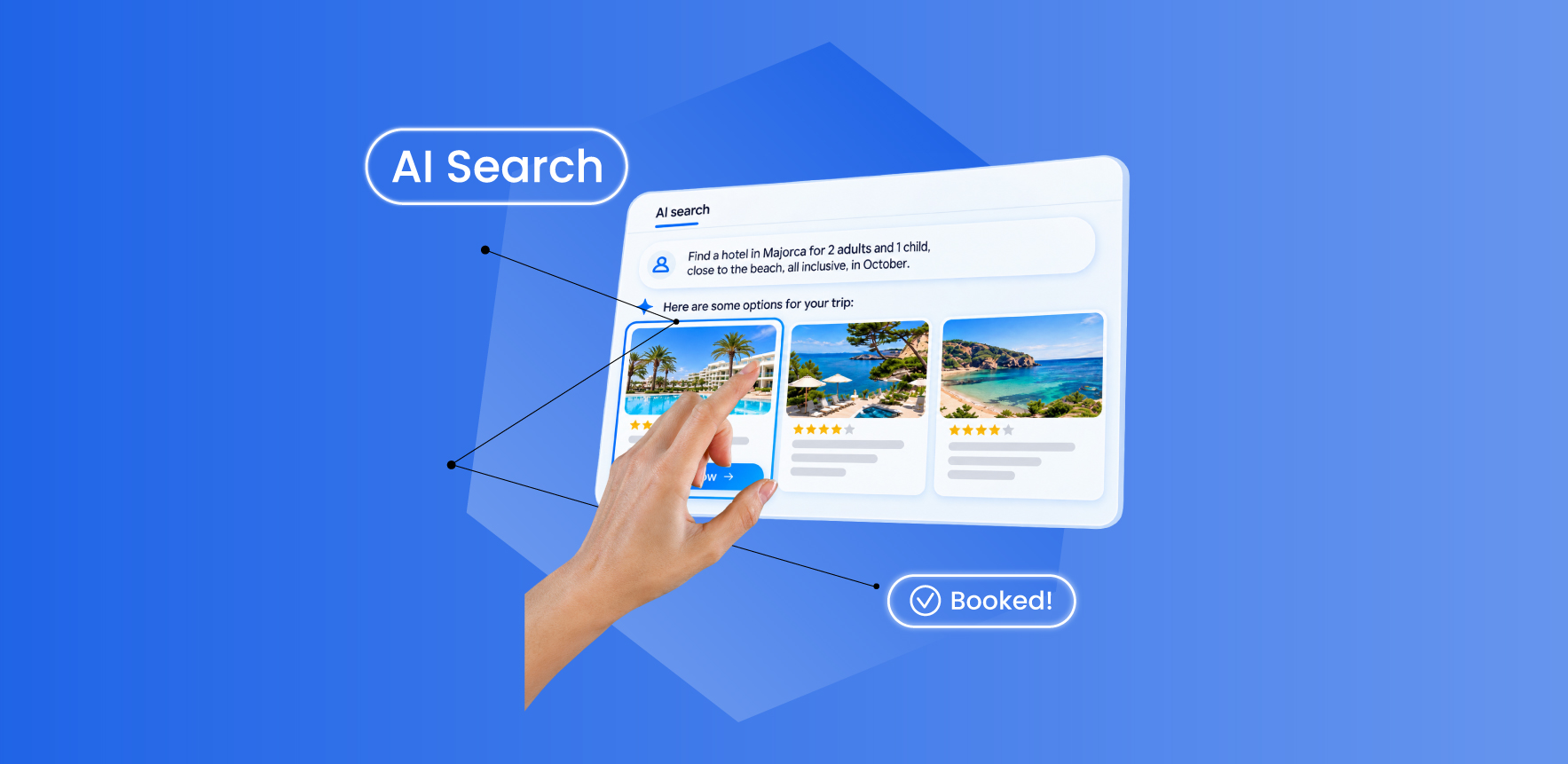

AI is becoming an increasingly important part of travel planning. Until now, its role has mainly been to help customers search, compare and choose travel offers. Now, the next stage is beginning: connecting AI conversations directly with the booking process.
This change is already happening in the US, where Google is introducing hotel bookings directly in AI Mode, Google's AI-powered search experience, where users receive AI-generated answers instead of a traditional list of links. This is also a signal for the travel industry in Europe to prepare for a model where customers can move from an AI recommendation to an actual booking in one process.
AI already helps customers find hotels, compare destinations and choose holidays that match their budget. Google is taking this a step further by connecting these recommendations with booking, working with partners including Booking.com, Expedia, IHG, Marriott and Wyndham.
This is an important change because AI is no longer just a tool for searching for travel offers. It is already becoming a sales channel for travel services.
How much impact does AI have on bookings today?
For now, AI still represents a relatively small share of actual sales. Booking Holdings says traffic from AI platforms accounts for less than 1% of all bookings on Booking.com.
There is an important difference here. This does not mean that these bookings were made directly through AI. A customer may have found an offer through ChatGPT or another AI tool, then visited Booking.com to complete the purchase.
These numbers show that AI is becoming more important in how customers search for and choose travel offers, but its share of total bookings is still small.
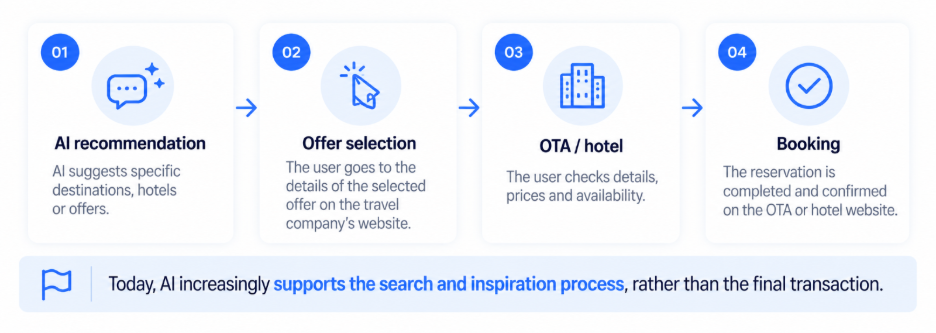
What needs to happen between an AI recommendation and a booking?
Until now, AI has mainly helped customers find suitable offers. Google is starting to shorten the process by connecting AI recommendations directly with booking.
However, a recommendation alone is not enough. AI needs access to up-to-date prices, availability and a system that can handle the booking.
Without these elements, customers will still need to move to another channel to complete their purchase.
Two approaches to AI-driven commerce
We can already see two different approaches:
- ChatGPT focuses more on searching for and choosing offers. AI helps customers search, compare and choose, while the transaction can be completed through the seller's checkout.
- Google brings the transaction closer to AI. In AI Mode, customers can move further through the booking process without leaving the conversation. For now, this solution is available in the US, while prices, availability and bookings are still handled by the seller's systems.
The difference is where the sale takes place. However, one thing remains the same:
AI can generate demand, but completing a sale still requires reliable booking technology.
Why is having your own booking system becoming more important?
Even if a customer starts their journey in Google AI Mode, ChatGPT or another AI tool, the actual transaction still needs to be handled by a booking system.
This is where booking technology becomes important. It provides the information needed to complete a sale, including offers, prices, availability, product options and the booking process itself.
The place where customers start their journey may change, but the need for a reliable booking system remains.
How are Resabee products preparing the travel industry for AI-driven sales?
A key role is played by Resabee Travel Booking System, a solution that combines a booking system with an e-commerce platform. It manages current offers, prices, availability and the entire booking process. This is where an AI recommendation can turn into an actual booking.
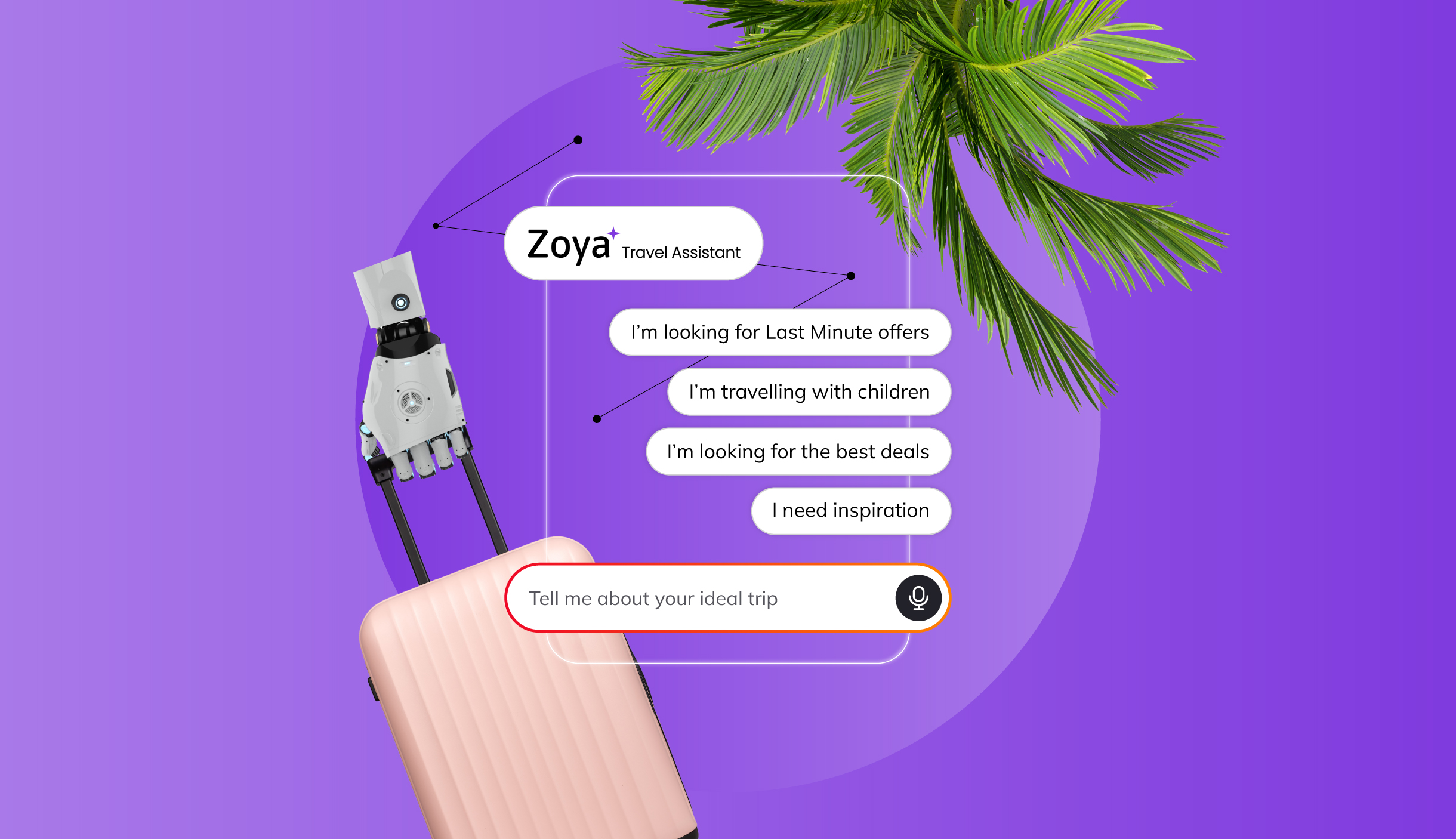
Zoya AI Travel Assistant helps customers find the right offer, guides conversations towards booking and supports travellers after their purchase. Resabee Dynamic Packaging allows travel companies to automatically create travel packages, such as flights + hotels. Resabee AI Hotel Content Builder automates the creation of hotel descriptions, helping travel agencies and tour operators prepare their offers for sale.
Together, these products create a connected Resabee ecosystem that supports the entire travel sales process, from preparing offers and the first customer interaction, through choosing and booking a holiday, to customer support after the purchase.
This approach will become increasingly important as more travel sales processes begin through AI.
What can you do right now?
Travel companies do not need to wait until AI-driven sales become standard across Europe. They can already start preparing their systems and offers for this new model.
Here are a few practical steps:
- Make sure your offers are easy for AI to understand and that important information is easy to access, for example with the help of Resabee AI Hotel Content Builder.
- Organise your offer, pricing and availability data.
- Connect your data sources with your booking system so customers always see up-to-date information.
- Keep information about your company and products consistent across all online channels.
- Prepare your booking system for new sources of traffic, where customers may start their journey outside your website.
If you want to check whether your current system is ready for this new way of selling travel, talk to our expert at Resabee Travel Tech.